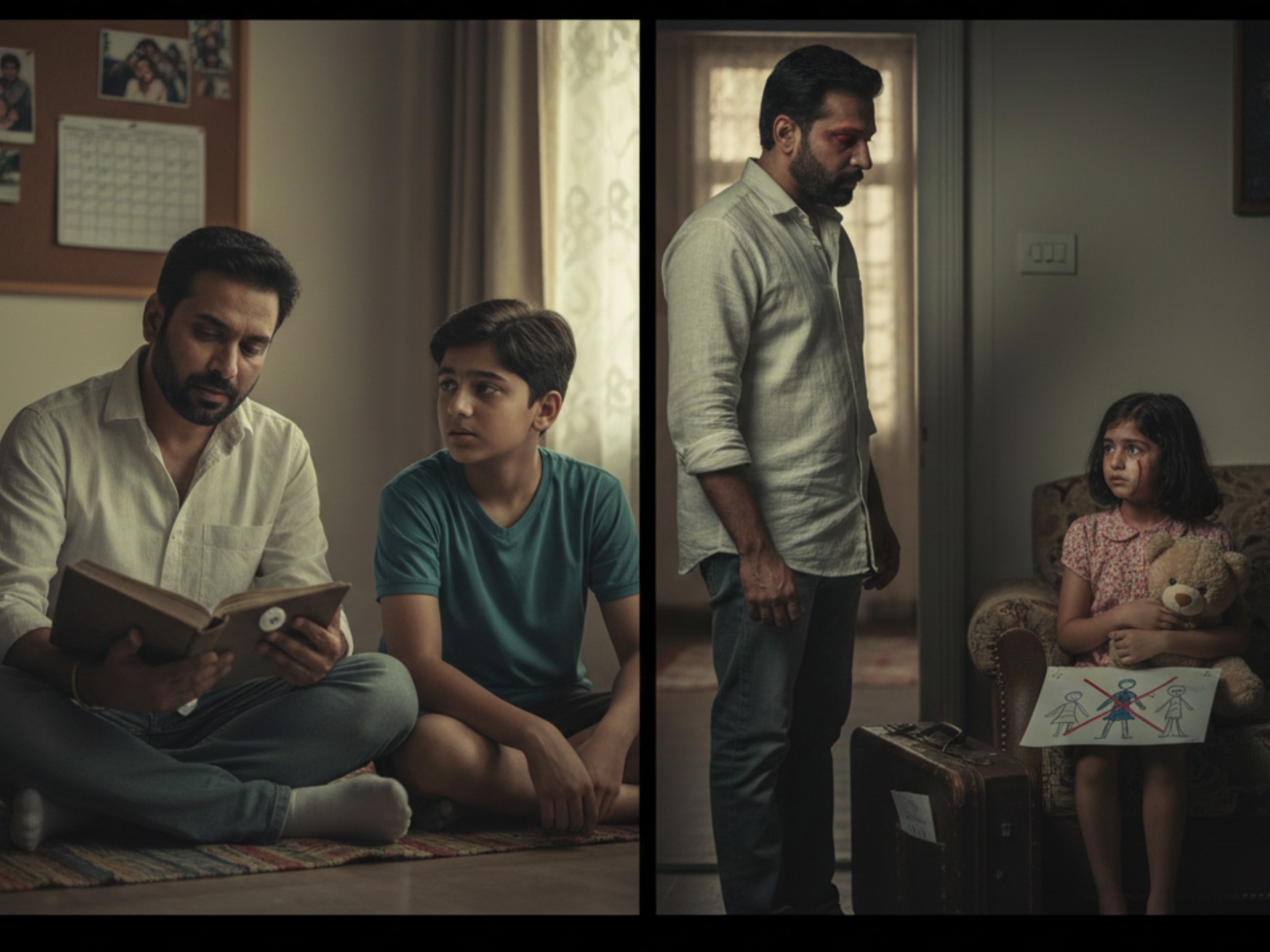






An absent mother does not disappear from the psyche when she leaves the room. She becomes the room. Her absence reorganises emotional gravity. It teaches the nervous system what care feels like when it is inconsistent, conditional, or entirely unavailable. Unlike overt abuse, maternal absence rarely arrives with spectacle. There is no single moment to point to. No dramatic rupture. Just a gradual hollowing out of emotional expectation.
And that hollow follows the child into adulthood. When addiction later appears, it does not feel foreign. It feels familiar. It occupies the same internal space the mother once should have.
Childhood Trauma as Emotional Dislocation
Childhood trauma is often imagined as something loud: violence, neglect, catastrophe. But maternal absence produces a quieter injury , one that operates through omission rather than intrusion.
A mother need not leave physically to be absent. Emotional unavailability, depression, preoccupation, narcissistic self-involvement, chronic exhaustion, or rigid control can all produce the same psychological outcome: a child whose emotional signals go unanswered.
The child adapts.
Needs are reduced. Feelings are managed privately. Longing is muted. Attachment becomes cautious.
This adaptation is not weakness. It is intelligence under constraint.
The Absent Mother Effect: A Structural Loss
The absent mother effect does not centre on abandonment alone. It centres on the collapse of emotional mirroring.
A mother is often the first regulator of emotion. She names feeling, soothes intensity, reflects worth. When that regulation is missing, the child learns to self-contain far too early.
This produces:
- emotional self-sufficiency before readiness
- difficulty recognising internal states
- fear of overwhelming others
- shame around dependency
- confusion between care and control
Addiction later functions as an external regulator , a substitute nervous system.
Mother Wound Psychology and Addiction
Mother wound psychology describes the internalised absence of maternal attunement. It is not hatred. It is not blame. It is an unresolved grief without language.
The child does not ask, Why wasn’t she there?
The child concludes, Something about me made presence impossible.
This belief becomes identity.
Addiction enters not as rebellion, but as compensation , a chemical mothering that soothes, numbs, regulates, and responds on demand.
Substances do not ignore needs. They do not grow distracted. They do not withdraw emotionally.
They arrive when summoned.
The Absent Mother Effect on Daughters
For daughters, maternal absence destabilises identity formation.
A mother models how to inhabit a body, how to hold emotion, how to negotiate intimacy, how to value oneself without performance. When that model is absent or distorted, daughters often grow up estranged from their own internal authority.
The absent mother effect on daughters may include:
- chronic self-doubt
- fear of being emotionally “too much”
- compulsive self-regulation
- difficulty receiving care
- confusion between nurturing and self-erasure
In recovery, these daughters often struggle to tolerate being held , by therapists, by groups, by relationships. Care feels unfamiliar. Attention feels unsafe.
Addiction, paradoxically, felt easier.
The Absent Mother Effect on Sons
For sons, maternal absence shapes emotional permission.
A mother often provides the earliest permission for vulnerability. Without it, boys may grow up emotionally stranded , unsure where softness belongs, unsure how closeness works.
The absent mother effect on son often appears as:
- emotional suppression
- difficulty articulating need
- fear of dependence
- confusion around intimacy
- reliance on distraction or substances to manage feeling
Addiction offers relief from emotional ambiguity. It provides sensation without exposure.
Trauma and Addiction Recovery
Trauma and addiction recovery intersect most painfully where early attachment injuries remain unresolved.
Recovery removes the substance , the stand-in regulator. Suddenly, the nervous system must experience unbuffered emotion. Longing resurfaces. Grief surfaces. Rage surfaces. Emptiness surfaces.
Without trauma processing, abstinence becomes unbearable.
This is why relapse risk is highest not during chaos, but during emotional quiet , when the absence is finally felt.
Symptoms of Childhood Trauma in Adulthood
The symptoms of childhood trauma in adulthood linked to maternal absence often masquerade as personality traits.
They include:
- emotional numbness
- hyper-independence
- chronic anxiety
- difficulty trusting care
- fear of vulnerability
- compulsive self-control
- attraction to emotionally unavailable partners
These are not character flaws. They are attachment strategies that outlived their usefulness.
Childhood Trauma Therapy and Re-parenting
Childhood trauma therapy in the context of maternal absence is not about revisiting memory. It is about rebuilding regulation.
Healing requires:
- consistent relational presence
- emotional attunement
- safe dependency
- somatic regulation
- corrective emotional experience
Therapy becomes an act of re-parenting , not replacing the mother, but reconstructing the functions that were missing: containment, mirroring, responsiveness.
This work is slow. Intimate. Destabilising.
And essential.
Healing Childhood Trauma Without Romanticising Pain
Healing childhood trauma does not mean forgiving absence or reframing it as strength.
It means allowing grief its full weight.
Many adults raised by absent mothers have never mourned what they did not receive , because it feels disloyal, ungrateful, or indulgent.
Recovery requires dismantling that restraint.
You cannot heal what you were never allowed to want.
How Childhood Trauma Affects Adulthood and Recovery
How childhood trauma affects adulthood becomes most visible under stress.
When systems break down , relationships end, routines shift, substances are removed , the original wound reactivates. The body remembers what the mind avoided.
Recovery succeeds only when this wound is acknowledged not as pathology, but as unfinished development.
Addiction was not the problem. It was the solution that eventually failed.
FAQs
What is childhood trauma?
An injury to emotional development caused by unmet attachment needs, neglect, abuse, or absence during formative years.
How does an absent mother affect a child?
It disrupts emotional regulation, attachment security, and self-worth formation.
How to heal from an absent mother?
Through trauma-informed therapy, emotional re-parenting, and relational safety.
How does an emotionally unavailable mother affect a daughter?
By destabilising identity, self-trust, and the ability to receive care.
How childhood trauma affects adulthood?
It shapes attachment patterns, emotional regulation, relationship dynamics, and addiction vulnerability.
How to treat childhood trauma in adults?
Through attachment-focused therapy, somatic work, and sustained relational repair.
How can Samarpan help?
At Samarpan Recovery Centre, we recognise that childhood trauma linked to an absent or emotionally unavailable mother can quietly shape a person’s sense of safety, attachment, and self-worth well into adulthood. The absent mother effect often shows up through what is commonly described in mother wound psychology, where individuals struggle with abandonment fears, emotional regulation, or chronic self-doubt. We see this manifest differently across genders, including the absent mother effect on daughters and the absent mother effect on son, yet the core pain remains similar. Many clients arrive with unresolved childhood trauma symptoms, signs of childhood trauma, or symptoms of childhood trauma in adulthood that have fuelled coping patterns linked to addiction, anxiety, or depression. At Samarpan, our approach to childhood trauma healing combines intensive psychotherapy, childhood trauma therapy, and trauma-informed care that supports both emotional processing and nervous system regulation. By integrating trauma and addiction recovery work in a contained, residential setting, we help clients move beyond survival patterns and into genuine healing,addressing not just behaviour, but the deep emotional wounds left by early maternal absence.