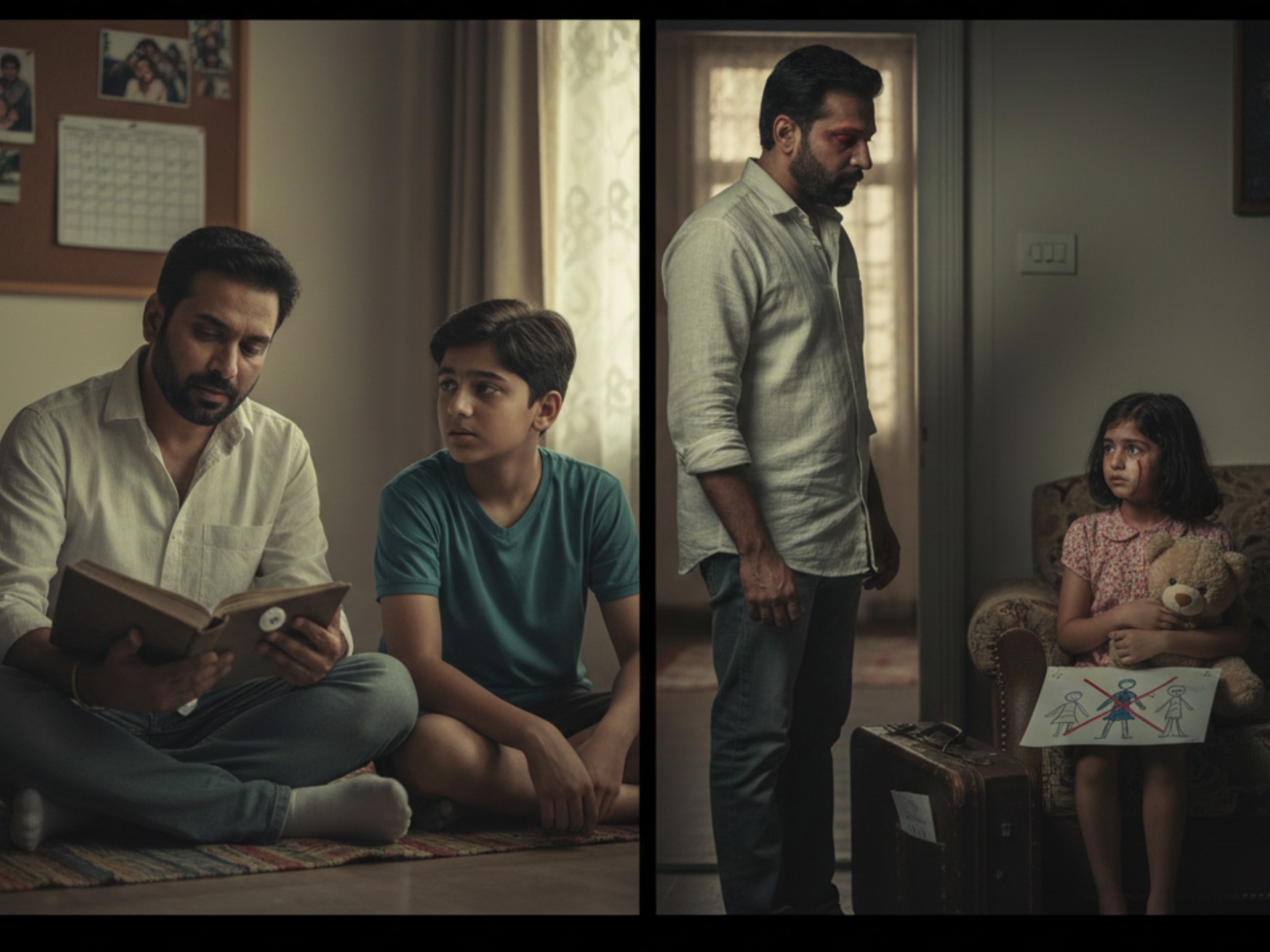






Middle child syndrome is not a diagnosis. It is a position. A psychological location within a family system where attention is already claimed and concern is habitually deferred. The eldest carries expectation. The youngest carries indulgence. The middle carries adaptation.
And adaptation, over time, becomes identity. Middle children do not grow up feeling unseen. They grow up learning how to remain unseen without disappearing. They become fluent in emotional minimisation. They learn to take up less space, ask for less, need less. Not because they lack need, but because need does not reliably produce response.
This is where addiction later finds its footing.
Middle Child Syndrome as a Systemic, Not Individual, Phenomenon
This is often trivialised into stereotypes: overlooked, independent, easygoing. But psychologically, it describes a systemic imbalance in relational attunement.
Middle children are frequently:
- less monitored than eldest siblings
- less indulged than youngest siblings
- expected to self-regulate earlier
- rewarded for flexibility rather than expression
They learn early that harmony matters more than visibility. That being “low maintenance” keeps the family functioning. That emotional moderation is safer than emotional insistence.
These lessons do not vanish in adulthood. They calcify.
Middle Child Syndrome in Adults
Middle child syndrome in adults does not announce itself as resentment. It shows up as emotional compression.
Many middle children develop:
- chronic self-containment
- difficulty asking for help
- discomfort with being prioritised
- internalised belief that needs are disruptive
- high tolerance for emotional deprivation
They are often highly functional. Reliable. Adaptable. Emotionally literate. And profoundly disconnected from their own unmet needs. Addiction enters not as rebellion, but as permission. Permission to feel without negotiating. Permission to need without explanation. Permission to occupy internal space without apology.
Middle Child Syndrome Characteristics and Addiction Vulnerability
The characteristics of this syndrome map uncomfortably well onto known addiction risk factors.
Middle children often:
- regulate emotions internally rather than relationally
- avoid conflict through self-silencing
- derive worth from usefulness rather than presence
- experience attention as conditional
- suppress distress to maintain equilibrium
Substances disrupt this pattern.
Alcohol, drugs, compulsive behaviours , these become private arenas where emotion can finally expand. Where restraint loosens. Where vigilance quiets. Where the nervous system experiences relief from constant self-modulation.
Addiction does not contradict middle-child coping. It completes it.
Signs of Middle Child Syndrome in Recovery
In recovery settings, signs of middle child syndrome often surface subtly.
These individuals may:
- minimise their addiction severity
- struggle to advocate for extended treatment
- disengage emotionally in group therapy
- feel guilt occupying therapeutic attention
- relapse quietly rather than seek support
They are rarely disruptive. Rarely demanding. Rarely resistant.
They comply. And compliance often masks unprocessed pain.
Middle Child Syndrome Traits and Relapse Patterns
The traits predispose individuals to a particular relapse profile: delayed, silent, self-managed, and often unspoken until consequences escalate.
Middle children are less likely to:
- call for help early
- express emotional overwhelm
- interrupt others’ needs with their own
They relapse not because they lack insight, but because they endure too long without relief. Relapse, for them, is not impulsive. It is accumulative.
The Middle-Child Attachment Style
Attachment for middle children is often ambivalent without being dramatic.
They learn to remain connected without being central. To stay emotionally available without becoming dependent. To survive without being held.
This produces adults who:
- oscillate between closeness and withdrawal
- fear becoming burdensome
- struggle with emotional entitlement
- tolerate relational asymmetry
In recovery, this manifests as difficulty relying on sponsors, therapists, or groups. Support feels intrusive. Attention feels undeserved. Care feels conditional. Substances, by contrast, feel uncomplicated.
Middle Child Syndrome Test: Why Self-Recognition Matters
A middle child syndrome test is not diagnostic , but recognition matters.
When individuals locate their addiction within family role conditioning, shame loosens. Behaviour begins to make sense. Relapse patterns become legible rather than moralised.
Recovery deepens when people understand why substances felt necessary , not just that they were harmful.
Middle Child Syndrome Treatment in Recovery
There is no singular middle child syndrome treatment. But effective recovery work for middle children must address role-based self-erasure.
This includes:
- learning to articulate need without justification
- tolerating attention without guilt
- interrupting over-responsibility patterns
- practising emotional visibility
- receiving care without performing for it
Therapy becomes an exercise in occupying space.
Recovery becomes an education in being seen without earning it.
How to Deal With Middle Child Syndrome in Recovery
To deal with middle child syndrome is to dismantle the belief that survival requires self-reduction.
This is uncomfortable work.
Middle children often feel disoriented when encouraged to prioritise themselves. They mistake self-focus for selfishness. They fear destabilising systems that once depended on their flexibility.
But recovery demands destabilisation.
Healing requires learning that equilibrium maintained through self-erasure is not safety , it is slow disappearance.
Prevention and Early Intervention
How to prevent middle child syndrome is less about family structure and more about attunement.
Middle children thrive when:
- their emotional experiences are mirrored explicitly
- their needs are named before they are withdrawn
- their role flexibility is acknowledged rather than exploited
When this does not occur, recovery later must supply what childhood did not: sustained, unconditional recognition.
Addiction and the Middle Child Narrative
Middle children are often described as “easy.”
Addiction exposes the cost of that ease.
Behind adaptability lies unexpressed longing. Behind independence lies unmet dependency. Behind functionality lies exhaustion.
Recovery is not about becoming louder. It is about becoming legible , to oneself first.
FAQs
What is middle child syndrome?
A pattern of emotional adaptation arising from reduced attunement within family systems.
What are middle child syndrome symptoms?
Emotional minimisation, difficulty asking for help, hyper-independence, suppressed distress.
How to deal with middle child syndrome?
Through therapy that prioritises emotional expression, need articulation, and self-entitlement.
How to help middle child syndrome?
By validating needs, encouraging visibility, and interrupting self-erasure patterns.
How to prevent middle child syndrome?
Through consistent emotional attunement and equalised attention within family systems.
What are the signs of middle child syndrome?
Chronic self-containment, conflict avoidance, emotional invisibility, delayed help-seeking.
How are middle children treated?
Often as flexible stabilisers rather than emotionally prioritised individuals.
How can Samarpan help?
At Samarpan Recovery Centre, we frequently work with individuals whose addiction and emotional patterns are shaped by middle child syndrome, a dynamic rooted in feeling overlooked, unseen, or emotionally sidelined within the family system. It often reveals itself in adulthood through people-pleasing, suppressed anger, identity confusion, or quiet self-neglect, all of which can increase vulnerability to substance use as a coping mechanism. Common syndrome traits such as emotional independence paired with low self-worth, difficulty asking for help, and internalised loneliness are carefully explored in therapy. Many clients arrive having resonated with the signs yet never connected these patterns to their addiction cycles. At Samarpan, our trauma-informed approach helps clients understand middle child syndrome in adults, heal attachment wounds, and break long-standing behavioural loops that fuel relapse. Through personalised psychotherapy, family systems work, and emotional integration,treatment becomes a pathway not just to sobriety, but to reclaiming identity, emotional visibility, and long-term recovery stability..