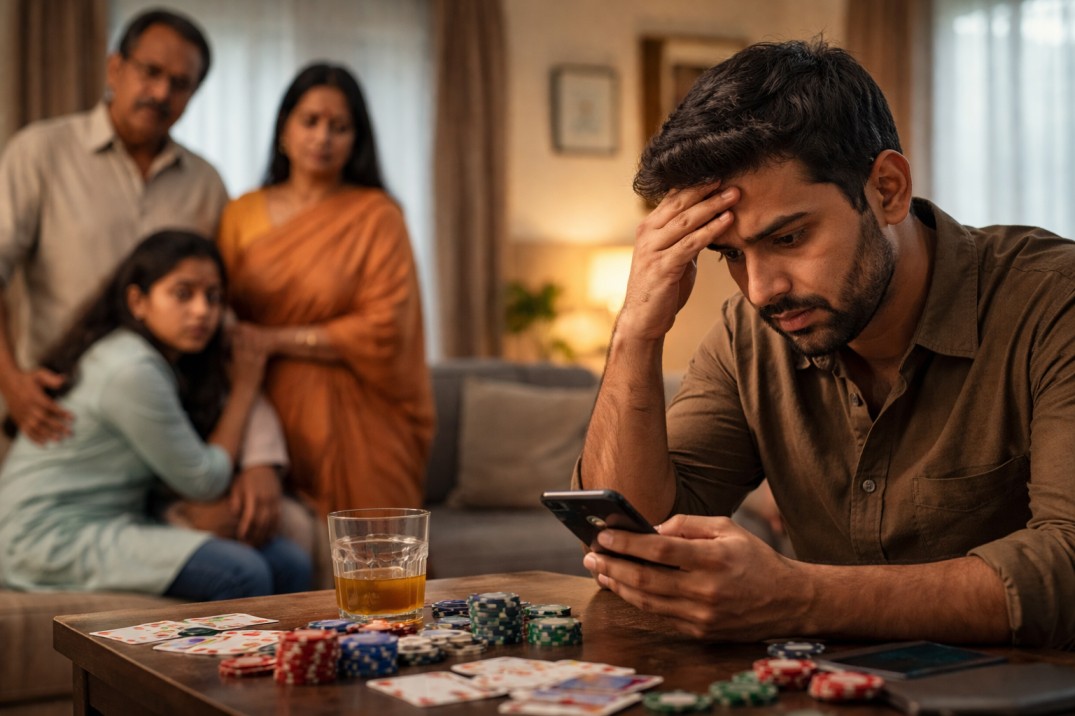






Gambling addiction, much like many other behavioural dependencies that infiltrate contemporary society, rarely begins with the catastrophic imagery people often imagine. It does not initially appear as ruined bank accounts, estranged families, or public disgrace. Instead, it emerges in far subtler and considerably more insidious ways, gradually insinuating itself into a person's everyday routines until the behaviour becomes so habitual that it appears almost indistinguishable from recreation. To the external observer the individual may simply appear enthusiastic about sports betting, online casino platforms, or occasional card games with friends. Yet beneath this apparently innocuous enthusiasm lies the psychological architecture of gambling addiction, a condition that increasingly demands attention within modern addiction treatment discourse.
To properly understand gambling addiction symptoms, one must first recognise that gambling is not merely a financial behaviour but a neurological event. Each wager activates the brain's reward circuitry, particularly the dopaminergic pathways responsible for anticipation and reinforcement. The thrill associated with uncertainty, the pulsating suspense preceding the outcome of a bet, and the intermittent reward patterns inherent to gambling platforms create an environment that is extraordinarily conducive to compulsive behaviour. Consequently, individuals who initially gamble for entertainment may gradually find themselves unable to disengage, even when the activity begins to jeopardise their financial stability, emotional well-being, or interpersonal relationships.
Recognising Early Signs of Gambling Addiction
When attempting to offer gambling addiction help, the first and perhaps most essential task involves recognising the behavioural indicators that suggest gambling has transcended recreation and entered the territory of dependency. Contrary to popular belief, the early signs of gambling addiction are rarely dramatic. Instead they often manifest as small yet progressively escalating changes in routine.
A person struggling with online gambling addiction may begin to display an unusual preoccupation with betting platforms, sports outcomes, or casino applications. Mobile devices are checked compulsively, often late at night when wagering opportunities are abundant. Conversations increasingly gravitate toward gambling topics, sometimes accompanied by elaborate justifications regarding strategy, probability, or the perceived inevitability of an upcoming win.
Financial behaviour may also begin to exhibit subtle irregularities. Minor withdrawals from bank accounts, unexplained transfers between financial platforms, or defensiveness when money is discussed can indicate the early stages of dependency. Importantly, these developments often occur well before the catastrophic debt scenarios typically associated with gambling addiction treatment interventions.
Psychologically, mood volatility becomes evident. The individual may oscillate between exhilaration following a win and irritability or despondency after losses. Such emotional fluctuations are not merely reactions to financial outcomes; they reflect the neurochemical rollercoaster inherent to compulsive gambling.
Why People Get Trapped in Gambling Behaviour
Understanding why individuals persist in gambling despite mounting consequences is essential for anyone attempting to provide effective support. Within the framework of behavioural psychology, gambling operates according to what researchers refer to as a variable reinforcement schedule. In simpler terms, rewards occur unpredictably, which paradoxically strengthens the compulsion to continue.
When someone wins occasionally, the brain interprets this intermittent reinforcement as confirmation that persistence will eventually yield success. This cognitive distortion, widely known as the gambler's fallacy, convinces individuals that a series of losses somehow increases the likelihood of a future win. The belief is statistically erroneous yet psychologically persuasive.
Furthermore, gambling frequently becomes an emotional coping mechanism. Stress, loneliness, boredom, and unresolved psychological trauma can all propel individuals toward activities that temporarily elevate dopamine levels. Within this context, gambling ceases to function merely as entertainment and instead becomes a form of maladaptive self-regulation. Addressing gambling addiction therapy therefore requires not only interrupting the behaviour itself but also identifying the emotional void that gambling temporarily fills.
How to Talk to Someone with Gambling
One of the most delicate aspects of offering gambling addiction counselling involves initiating conversation without triggering defensiveness. Individuals engaged in compulsive gambling often experience significant shame regarding their behaviour, even if they outwardly minimise its seriousness. Confrontation framed as accusation frequently intensifies secrecy rather than encouraging honesty.
A more constructive approach involves expressing observations rather than judgments. Statements that emphasise concern, such as noticing changes in mood, sleep patterns, or financial stress, can open dialogue without immediately positioning the individual as morally culpable.
It is also important to recognise that many people affected by gambling addiction already understand that their behaviour is problematic. The difficulty lies not in awareness but in control. For this reason, supportive dialogue should prioritise collaboration rather than condemnation.
Encouraging Professional Gambling Treatment
Although supportive relationships play an indispensable role in recovery, structured professional intervention is often necessary to interrupt compulsive gambling patterns. Gambling addiction therapy typically incorporates cognitive behavioural therapy, which focuses on identifying distorted thinking patterns and replacing them with more realistic interpretations of probability, risk, and reward.
In cases where gambling behaviour has produced significant financial, psychological, or interpersonal harm, residential gambling addiction rehab may be recommended. Such programs provide an immersive therapeutic environment in which individuals can stabilise emotionally while developing practical relapse-prevention strategies.
Within the Indian context, specialised centres offering gambling addiction treatment in India increasingly integrate psychological counselling, financial recovery planning, and behavioural therapy. These comprehensive approaches recognise that effective recovery requires addressing both the behavioural habit and the emotional vulnerabilities that sustain it.
Supporting Someone During Recovery
Providing ongoing gambling addiction help after treatment begins requires patience, empathy, and appropriate boundaries. Financial transparency may become necessary in the early stages of recovery, sometimes involving shared budgeting arrangements or temporary restrictions on access to betting platforms.
Encouraging the individual to participate in therapy sessions, support groups, or recovery communities can significantly enhance long-term outcomes. Hearing similar experiences from others confronting the same struggle dismantles the illusion of isolation that frequently accompanies addiction.
Perhaps most importantly, supporters must understand that recovery is rarely linear. Periods of progress may be followed by setbacks. Such fluctuations should not be interpreted as failure but rather as part of the complex process through which individuals gradually regain control over compulsive behaviours.
Conclusion
Helping someone overcome gambling addiction requires far more than advising them to stop betting. It requires understanding the intricate psychological and neurological mechanisms that transform recreational gambling into compulsive behaviour. The thrill of uncertainty, the intermittent reinforcement of occasional wins, and the emotional relief gambling temporarily provides all combine to create a powerful behavioural loop.
Effective treatment for gambling addiction therefore depends upon empathy, structured therapeutic intervention, and sustained social support. When these elements converge, individuals struggling with gambling dependency can gradually reconstruct healthier relationships with money, risk, and emotional regulation.
FAQs
-
What is gambling addiction treatment?
Gambling addiction treatment typically involves cognitive behavioural therapy, financial counselling, support groups, and sometimes residential rehabilitation programs designed to help individuals stop compulsive betting behaviours.
-
What are the signs of gambling addiction?
Common indicators include preoccupation with betting, increasing time spent gambling, secrecy around finances, emotional volatility after wins or losses, and difficulty stopping despite negative consequences.
-
How to spot gambling addiction?
Signs include compulsively checking betting apps, unexplained financial transactions, staying up late to gamble online, irritability when unable to bet, and using gambling as a way to escape stress.
-
What is a gambling addiction treatment?
It refers to structured therapeutic programs, counselling services, and rehabilitation centres that help individuals address compulsive gambling behaviour and rebuild financial and psychological stability.
How can Samarpan help?
Helping someone through gambling addiction can feel confusing and emotionally exhausting. Unlike substance dependence, behavioural addictions often hide in plain sight. There is no smell of alcohol, no visible intoxication, yet the impact can be just as destructive. Financial instability, secrecy, irritability, compulsive betting, and emotional withdrawal are often some of the earliest signs of gambling addiction. Many families recognise the problem only after the behaviour has escalated into serious debt or relational strain.At Samarpan, we understand that effective gambling addiction treatment must address far more than the behaviour itself. Gambling activates the same reward circuitry in the brain that drugs and alcohol do, making the cycle of anticipation, loss, and chasing wins deeply reinforcing. Individuals experiencing online gambling addiction often become trapped in a loop where impulsivity, emotional stress, and distorted beliefs about luck or probability fuel continued risk-taking. Our approach to gambling addiction treatment in India begins with careful psychological evaluation. We assess the severity of gambling addiction symptoms, underlying mental health conditions, and the environmental triggers sustaining the behaviour. For some individuals, gambling becomes a coping strategy for depression, anxiety, loneliness, or unresolved trauma. Understanding this emotional landscape is essential before meaningful recovery can begin. Samarpan provides specialised gambling addiction counselling and gambling addiction therapy designed to break this cycle. Through structured psychotherapy, clients learn to identify triggers, challenge irrational thinking around betting, and develop healthier coping mechanisms that replace the adrenaline rush associated with gambling. Family involvement is often integrated into treatment because secrecy and financial strain frequently damage trust within close relationships. For individuals requiring deeper intervention, our luxury rehabilitation centre in Mumbai and Mulshi offers gambling addiction rehab and immersive treatment for gambling addiction in a private and structured environment. Within our rehab for gambling addiction, clients receive daily therapeutic support, behavioural restructuring, and relapse prevention planning. The focus is not only on stopping the behaviour but on rebuilding decision-making, emotional regulation, and financial accountability. What makes Samarpan distinct is the balance between clinical expertise and human understanding. Seeking gambling addiction help can carry immense shame, and many individuals delay treatment because they fear judgment. At Samarpan, recovery begins with dignity. We treat behavioural addictions with the same seriousness and compassion as any other dependency. Gambling addiction thrives in secrecy and isolation. Recovery begins when the cycle is understood, confronted, and gradually replaced with healthier patterns. At Samarpan, the goal is not simply abstinence from betting, but the restoration of stability, self-control, and psychological resilience that allows individuals to rebuild their lives with confidence.